
A few years after I first came to Madagascar in 2001, two things really started to bother me.
The first was hand pumps. Most hand pumps built by non-governmental organisations (NGOs) stood rusting away in villages across the country, just a few years after they were built. Simply because nobody had solved maintenance and repair.
The second was the trees. Madagascar’s incredible rainforests were doomed to disappear. You could watch the deforestation creep up the mountains, slowly and relentlessly, until soon nothing would be left but barren hills and dried-up streams. Trees hundreds of years old, worth tens of thousands of dollars in ecosystem value, cut down to make charcoal to cook on, or burnt to clear land for a few seasons of mountain rice.
A plantation of fishing rods
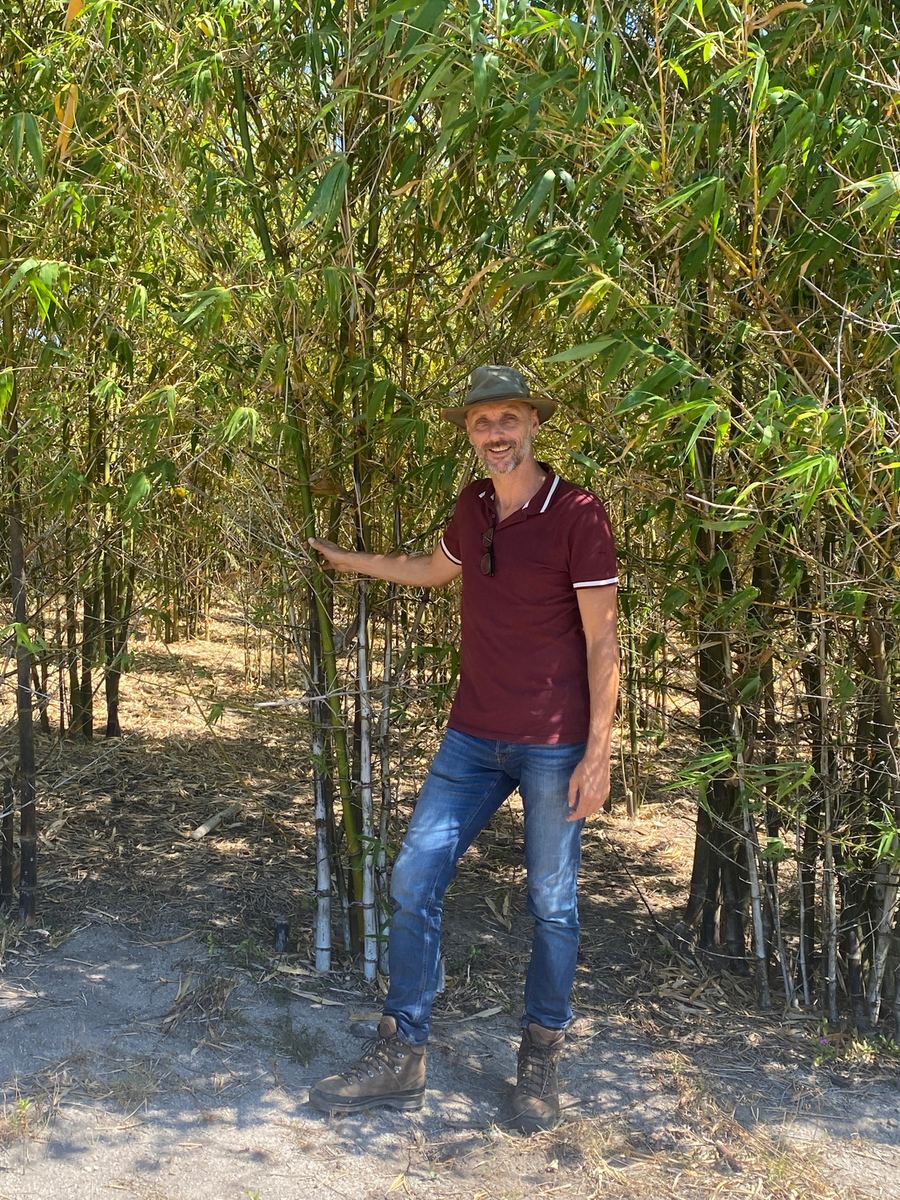
A bit naively, we started a plantation of thick-walled bamboo, to grow a renewable source of biomass for charcoal. Or perhaps for fuel pellets. A great idea, but it didn’t work out…
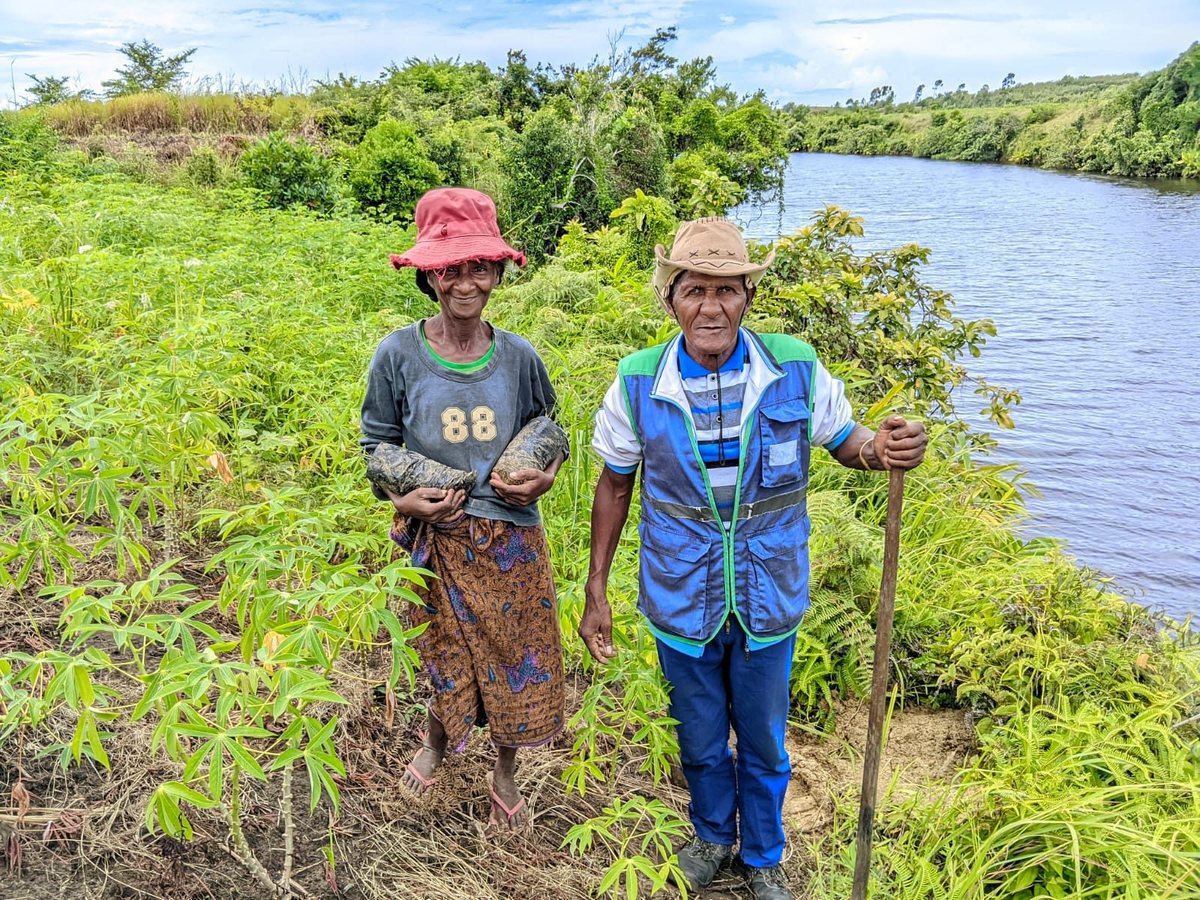
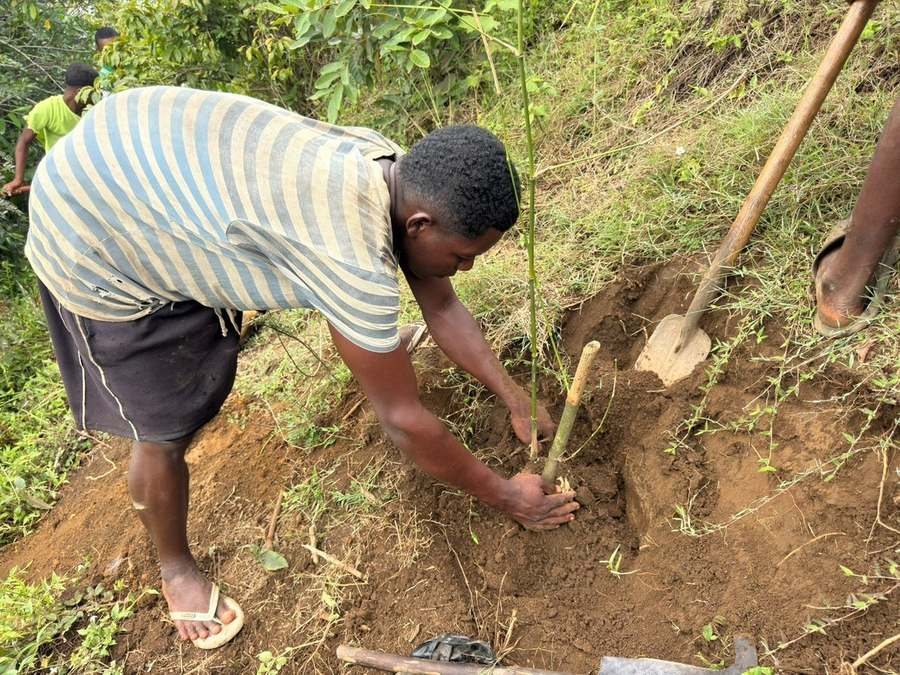
We hired the best experts and tested intensively beforehand, yet the bamboo simply failed to grow well in this area. Most culms stayed thin: a plantation of fishing rods we still don’t know what to do with. But a few hectares did really well, and they inspired a whole new project elsewhere, Project RiverGuard. That is a story for another day.
Serendipity under a thatch roof
One rainy morning, just over two years ago, I met an investor at the bamboo plantation. Under a thatch roof, I brewed tea on a gasifier stove running on bamboo pellets, and explained what had worked, what hadn’t, and what might.
You learn more from failure than from success. He got that, and he understood the vision. Not long after, the company he worked for invested a substantial amount, and we got to work.
Cookstoves: half the fuel, a fraction of the smoke
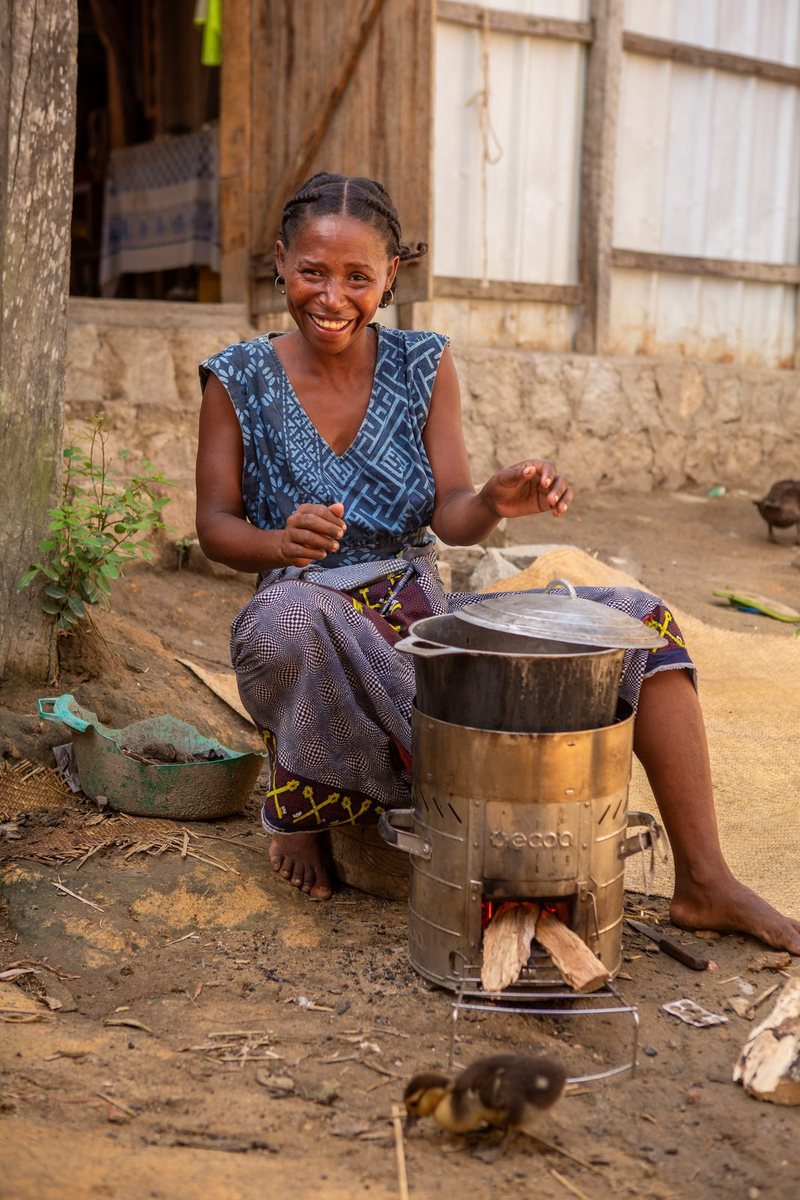
If growing charcoal or fuel pellets doesn’t work, you can still take enormous pressure off the forests with fuel-efficient cookstoves. They cut fuel use in half. They dramatically reduce smoke, which causes indoor air pollution and, over time, respiratory disease and cancer, mostly in women. And they cut greenhouse gas emissions.
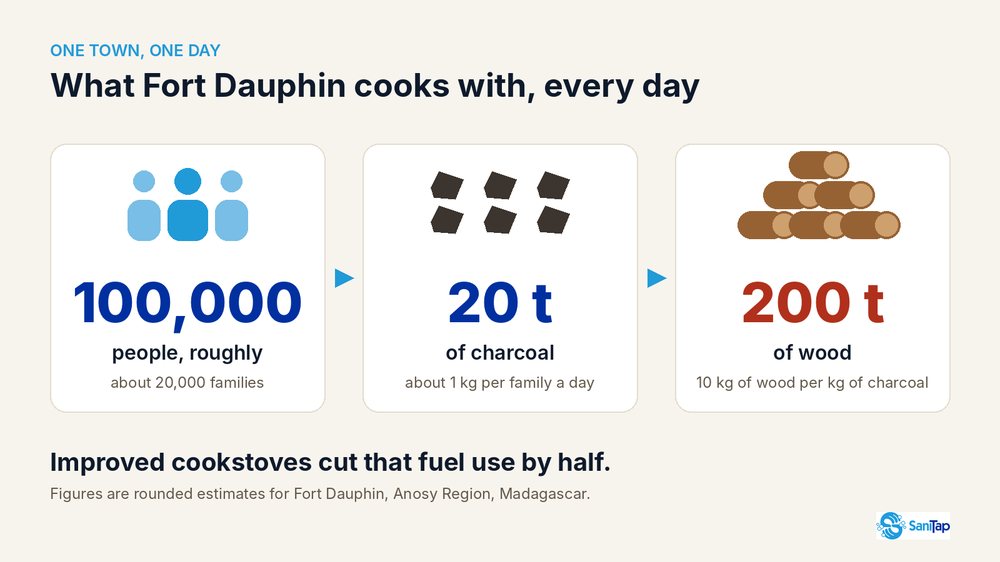
To make this concrete: Fort Dauphin has about 100,000 inhabitants. Its 20,000 or so families each burn, on average, a kilo of charcoal a day. That charcoal is made, very inefficiently, in the surrounding countryside: every kilo of charcoal takes 10 kilos of wood. So, the 20 tonnes of charcoal Fort Dauphin burns every day represent 200 tonnes of wood going up in smoke. Day after day…
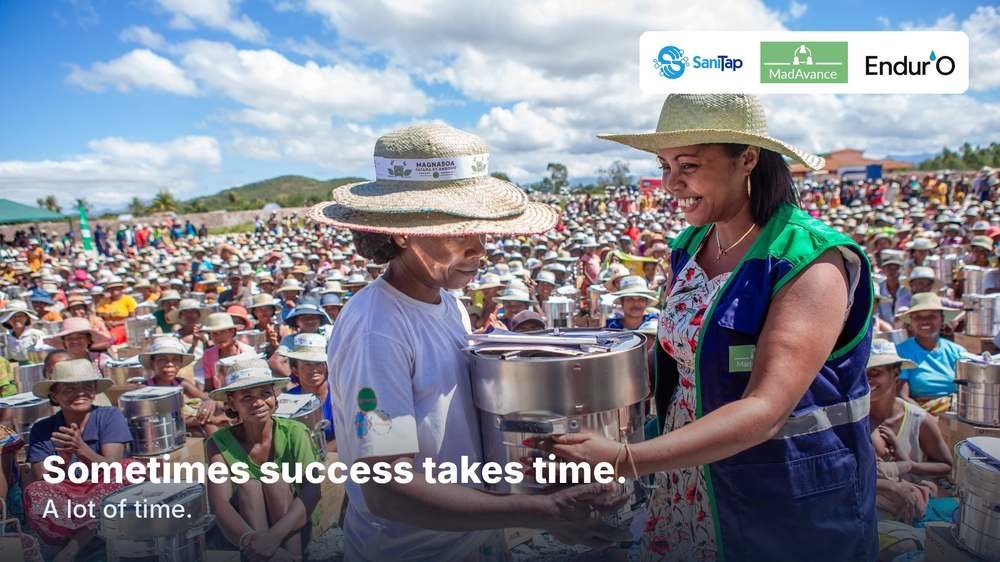
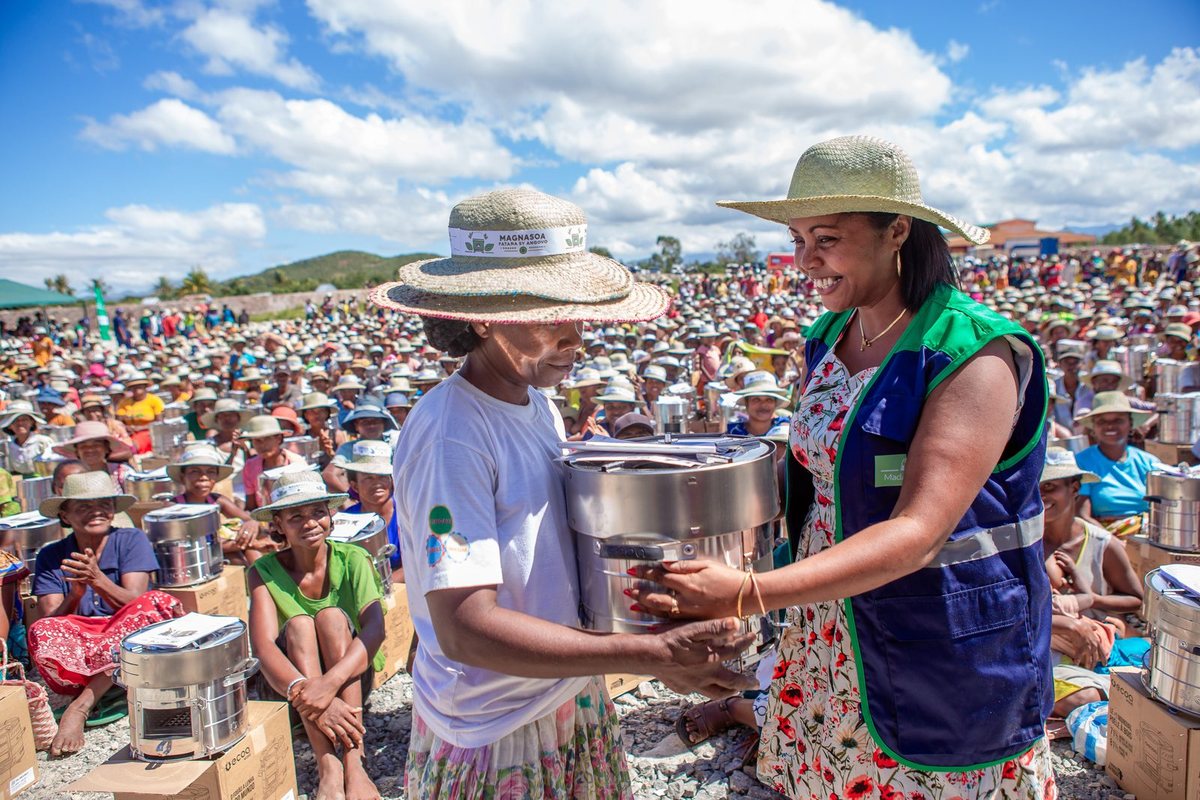
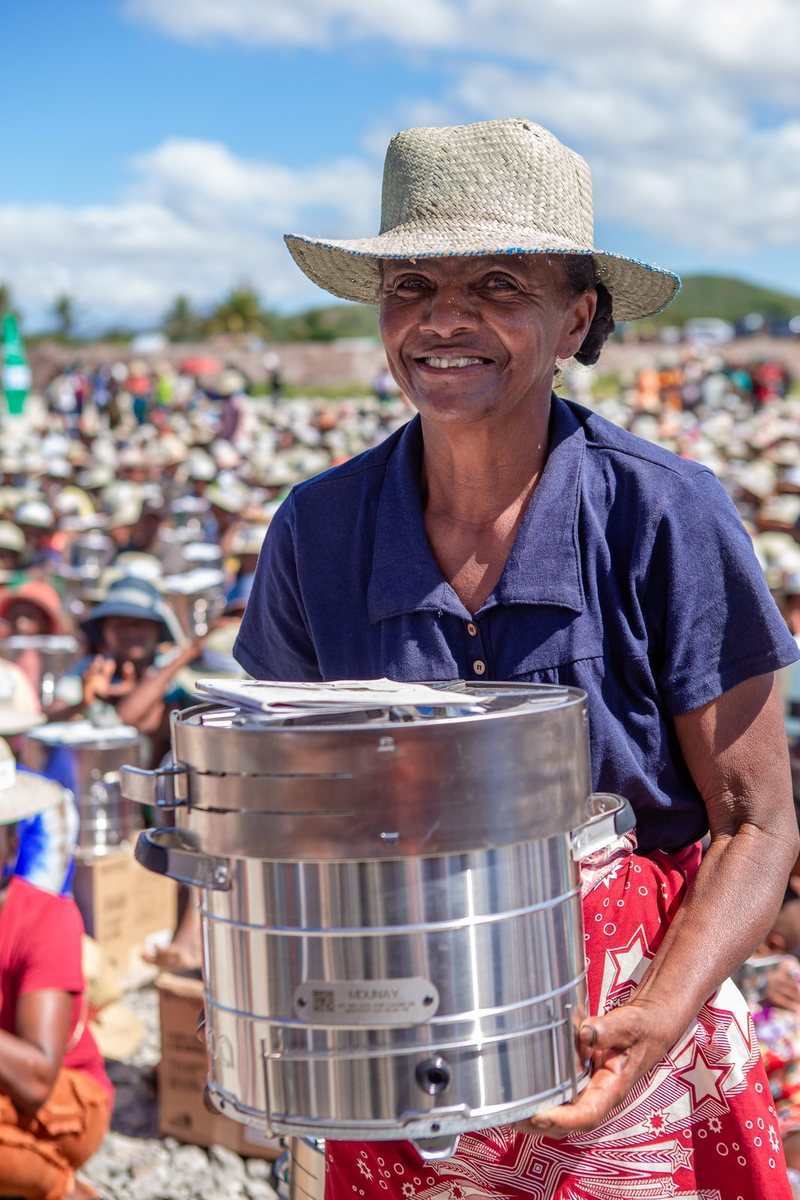
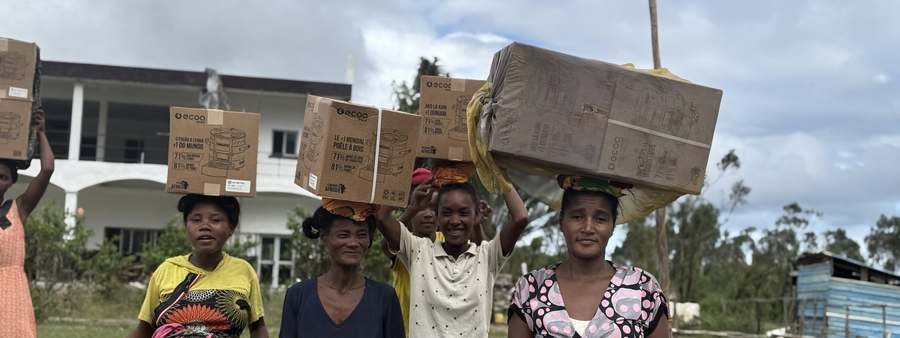
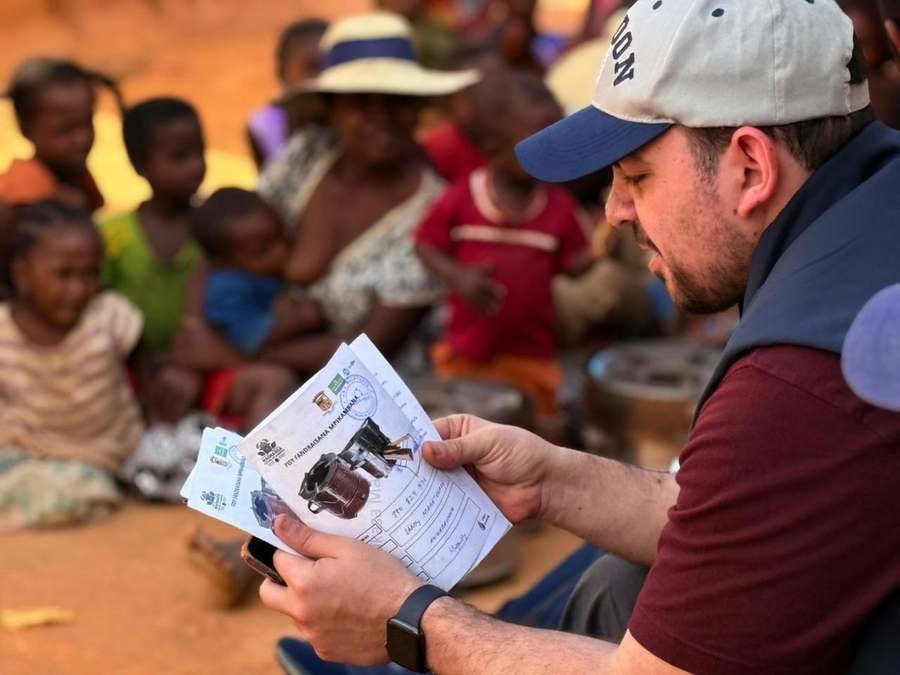
Together with the incredible team of the Malagasy NGO MadAvance, we procured 120,000 improved cookstoves and distributed them to over 90,000 families in Fort Dauphin and the villages of the Anosy Region. No village was too remote. By truck, by ox cart or carried on foot, the stoves reached everyone.
Charcoal and firewood use, cut by half. Indoor air pollution vastly reduced, preventing respiratory disease and needless deaths. Huge quantities of wood saved from the fire, and greenhouse gas emissions reduced.
Doing carbon credits the right way
Turn those reductions into carbon credits, sell them, and use the income to keep the programme running year after year. That is a sustainable business model.
It isn’t that easy, of course. Just as we started, the cookstove carbon sector was hit by a few massive scandals. Unscrupulous or ignorant developers over-credited, or blatantly cooked the books, selling emission reductions that never happened and destroying a lot of credibility along the way.
We wanted to do things the right way. Extensive and meaningful community engagement, especially with women. Deep relationships with national and local authorities. Highly conservative assumptions in every calculation. The most durable and efficient stoves money could buy. And rigorous record keeping.
Water: keeping the pumps running
Meanwhile, we hadn’t forgotten those hand pumps, rusting away in villages across the country. Carbon credits can help here too.
When people lose access to safe drinking water and have no filter or chlorine tablets, they can always boil their water. They do that over firewood or charcoal - and if they don’t yet, they really should, to protect their family’s health! But burning forests just to make dirty water safe to drink, or urging people to do so for their health, is madness when you can simply repair the broken pump and keep it running ever after.
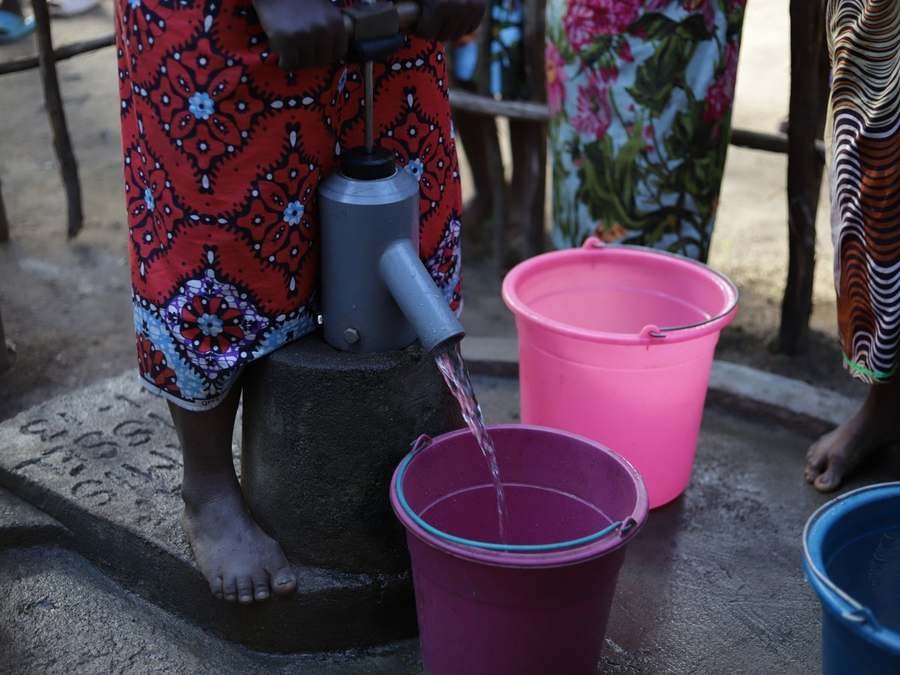
Hand pumps are simple technology and not hard to maintain or repair. But that takes a little money, which villagers often don’t have, or need for other priorities. Spare parts, trained technicians, transport: the usual reasons given for failing water infrastructure all go away once you solve the underlying problem. Where does the money come from? NGOs and donors won’t pay for maintenance, and government and users can’t or won’t. We found the answer in carbon credits.
The logic is the same as for cookstoves. Restored access to safe water reduces the need to boil water on non-renewable biomass, and the emissions avoided can be certified as carbon credits. Sell them, use the revenue to maintain the water points, and you have a financially viable answer to a sustainability problem that has stumped NGOs and United Nations agencies for decades.
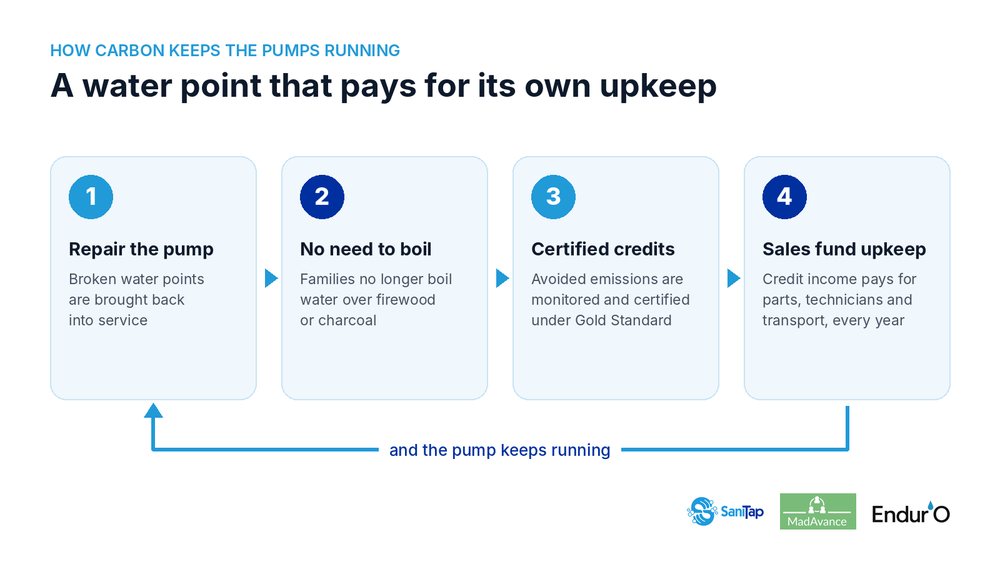
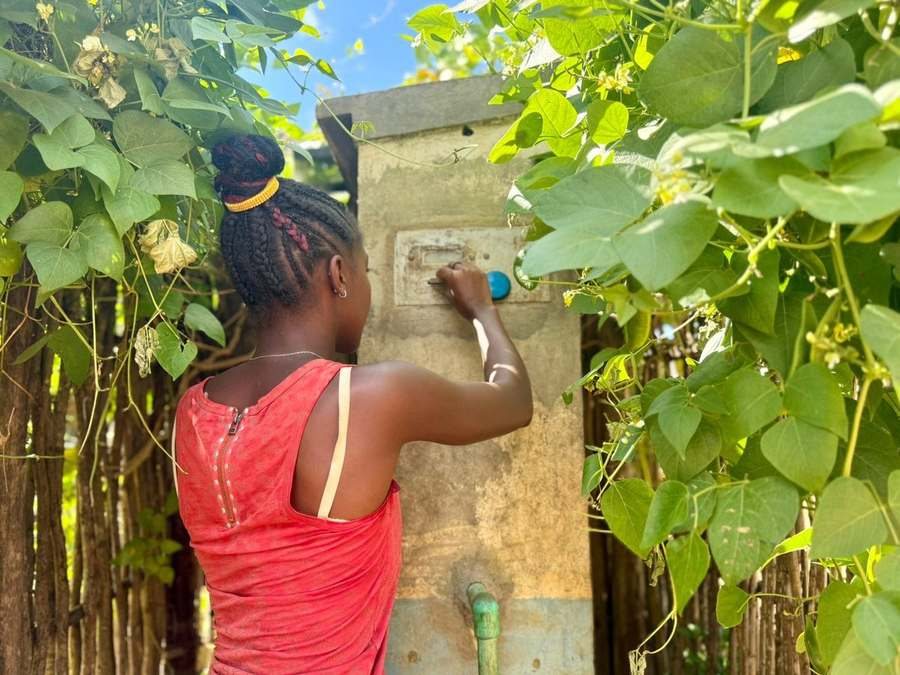
Today, SaniTap and our partners MadAvance and Endur’O keep over 740 hand pumps running, serving over 125,000 people with safe drinking water, year after year. Endur’O, our joint venture with NatuRano, is bringing piped water with prepaid smart taps to over 130 sites. And that’s for starters: we want to grow this across the country.
Lessons learned
If there’s a lesson in this story, it is this: never give up. And never underestimate the power of serendipity. Keep chipping away until you succeed. And when you do, do things well: best practice, conservatively. And have some fun doing it!
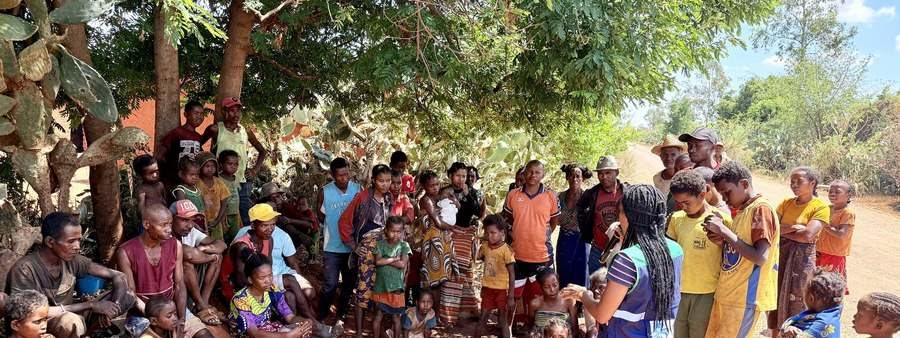
I am deeply grateful to the incredible teams at MadAvance, Endur’O and SaniTap, to our investors and donors, to our partners in the Ministries of Energy, Environment and Water, and to the Regions and Communes. And most of all to the ordinary Malagasy families who welcome us into their villages and their homes.
More on how we measure impact: sanitap.org/our-impact